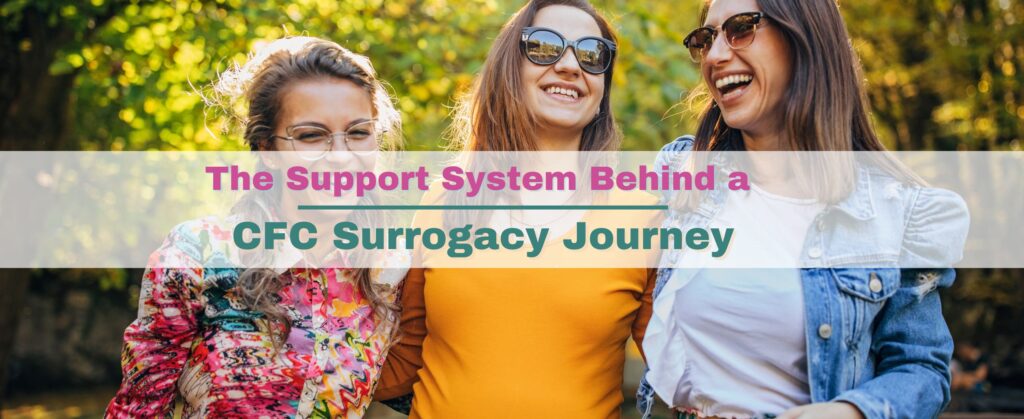
 Gestational Surrogacy is a journey of trust, intention and love, and it can still be both physically and emotionally demanding. The medical care and legal contracts that form the backbone of the surrogacy journey are crucial to success, while the wellbeing of the gestational carrier is equally as important. A surrogate needs personal support from the people in her life, connection with others who understand the experience firsthand, and professional resources that address the complexity of the journey. Creative Family Connections ensures these support structures are built into the process from the beginning.
How Surrogacy Adds to the Demands of Pregnancy
Pregnancy already requires a huge commitment of time and emotional energy alongside the physical toll on the woman’s body. In surrogacy, the gestational carrier has all those normal demands of pregnancy in addition to everything involved in coordinating with the intended parents. Before an embryo is even transferred, the surrogate goes through a period of medical preparation that isn’t necessary in a typical pregnancy. For example, hormone treatments are often used to synchronize the surrogate’s ovulation cycle with the timeline for embryo transfer.
Once the pregnancy is underway, the surrogate is in regular contact with the intended parents. This relationship involves a degree of openness about her body and health that goes beyond what most people share even with close friends. She’s sharing updates on symptoms, test results, and medical appointments with the intended parents and agency, who aren’t family or close friends but who still have a deep, emotional investment in the pregnancy. That dynamic takes ongoing adjustment, even when everyone involved is well-intentioned and respectful.
While maintaining regular contact with family, friends, and the intended parents, surrogacy introduces experiences that are generally unfamiliar to most people in a surrogate’s immediate circle. Her family and friends may be supportive in a general sense, but they’re often not fully aware of how the arrangement is structured or the complex emotional dynamics involved. This gap in understanding can make it difficult for the surrogate to fully share or contextualize the experience on a daily basis.
The Primary Support Person
These challenges are why Creative Family Connections encourages surrogates to designate a primary support person (PSP) during their onboarding into a program. The PSP is typically a spouse, partner, close friend, or family member who commits to being actively involved throughout the journey. The PSP is there to step in when the surrogate needs help, whether that means attending key medical appointments, assisting with logistics during the transfer process, or taking on extra household responsibilities when the surrogate is physically taxed.
The specific support varies depending on what phase of the journey the surrogate is in. Early on, the PSP might help with hormone injections. During pregnancy, they might attend appointments, take on additional childcare, or simply be available to talk when the surrogate needs to process her feelings about the pregnancy. After delivery, the PSP provides physical and emotional support during postpartum recovery.
For surrogates who have a spouse or partner, the PSP role often falls to that person naturally. For single surrogates, it may be a mother, sister, or close friend who is able to take on that role. As part of the screening process, when appropriate, agencies include the PSP to confirm that they understand the scope of the journey and are prepared to provide consistent support throughout. This ensures that the surrogate has at least one person in her immediate circle who is familiar with the process and able to step in when support is needed.
Agency-Led Support
Creative Family Connections provides journey support that runs alongside the medical and legal process. Surrogates have access to counseling, peer networks, and journey coordinators who manage logistics and serve as a central point of contact. These layers of support work together with the PSP to address both the practical and emotional demands of the journey.
Postpartum Transition
Support for the surrogate does not end at delivery, as the postpartum period brings its own set of physical and emotional considerations. Recovery from childbirth requires time and care, regardless of whether the delivery was vaginal or surgical. At the same time, the surrogate is navigating the transition out of the pregnancy itself, including changes in routine, hormonal shifts, and a shift in her relationship with the intended parents. Even when the experience has been positive and clearly understood from the outset, this period can require adjustment.
At CFC, surrogates have continued access to counseling and postpartum support for surrogates who have recently delivered. The PSP remains an important presence during recovery, helping with day-to-day needs and staying attentive to signs that additional support may be needed. The surrogate’s peer network also plays a role, particularly through connections with others who have already moved through the postpartum transition and can offer perspective on what to expect. Together, these forms of support help ensure that the transition out of the surrogacy journey is managed with the same level of structure and attention as the earlier stages.
Contact Creative Family Connections
Comprehensive support makes the surrogacy journey more sustainable for surrogates and creates better outcomes for intended parents. Creative Family Connections builds support into every phase of the surrogacy journey, from initial screening through the postpartum transition. Surrogates have access to consistent guidance, peer connection, and coordinated care, while intended parents move through the process with a structure designed to support everyone involved. If you’re considering surrogacy, either as a surrogate or an intended parent, contact us to learn more about how the process is managed from beginning to end.
Resources:
We are thrilled to share that Creative Family Connections will be featured on All Access with Andy Garcia. Tune in for an inspiring look at the CFC story and how our team provides proactive, ethical support throughout every surrogacy journey.